The Great Reversal: Worship & The Brain
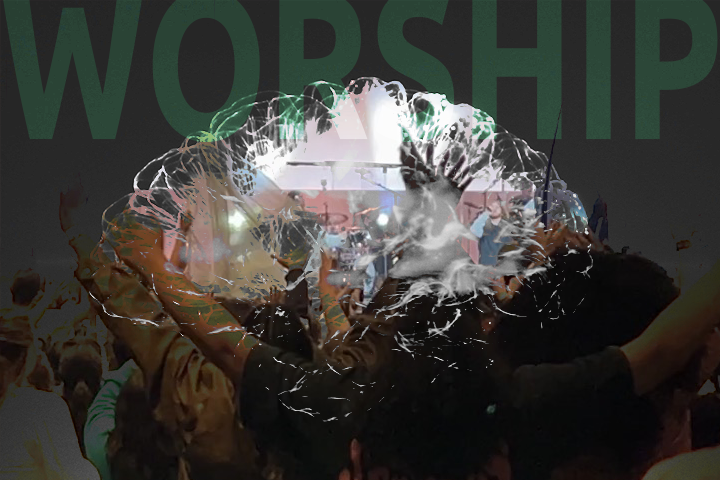
Can worship reverse brain rot?
This week we were at Southeastern University for their annual conference, and something extraordinary happened. Worship at the end of the Wednesday morning session was powerful (preceded by a time of repentance and commissioning), and it just wouldn't stop. It continued into the night session and then moved back to campus at midnight, going all throughout the following day and beyond. Classes were canceled. Students stayed.
Today finished the fourth day of ongoing prayer and worship. A shift is happening. God is moving. The spiritual effects of worship are undeniable. But there is something beautiful happening physiologically, too. Their brains are literally being reshaped as they orient their attention to Jesus.
The Battle in the Brain
I had the opportunity to guest lecture on campus in a Ministry Strategies class the Monday morning before SEU Conference began. My focus? How addictive technology impacts students’ brains and consequently, their spiritual health. This impact accumulates to affect the spiritual health of an entire church and even the global Body of Christ.
In the class, I explained how today’s technology overstimulates the amygdala — the emotional center of the brain responsible for fight-or-flight responses. With constant notifications, scrolling, and digital stimulation, dopamine surges in this region.
But here’s the critical issue: your brain only has so much blood to go around.
As blood flows toward the amygdala — toward emotional reactivity and survival responses — it is not flowing to the frontal lobe like it needs to. This leads to the measurable underdevelopment of the pre-frontal cortex (evidenced by MRI technology), which governs decision-making, impulse control, long-term thinking, empathy, and moral reasoning.
I asked the students a simple question: At what age does the pre-frontal cortex become fully formed? They answered easily: "25."
Then I had them hold up their hands and show how many years remained between their current age and 25. Those years matter. They are not throwaway years. They are the final stretch in the formation of their executive function, which impacts capacity for focus, goal setting, memory, self-restraint, and cognitive discernment.
And technology is not neutral in that last phase of development.
What Happens When Students Unplug?
With that in mind, consider what's happening during this spiritual outpouring at SEU. We've been watching the livestream since we got back on Thursday, and my husband made a profound observation. “Look at all of these students in the chapel, completely unplugged from addictive technology for hours.”
Whoa, he's right. Day after day: phones down, eyes lifted, attention sustained.
Day after day: phones down, eyes lifted, attention sustained.
Unplugging alone certainly has physiological healing properties all on its own. (That's why I wrote The Unplugged Devotional.) But worship goes even further to reverse overstimulation and chaos in the brain.
The Neurophysiological Benefits of Worship
Ellen Hayes wrote an article for Relevant Magazine about a new peer-reviewed study by Dr. Michael Liedke, titled "The Neurophysiological Benefits of Worship" in the Journal of Biblical Foundations of Faith and Learning, which gives us some powerful clarity about what is happening to the brain when we worship and pray.
These activities actually reshape the brain, evidenced by MRI technology. We now know that repeated practices literally alter neural pathways.

Here’s what the research shows:
1. Worship Quiets the Fear Center
Worship reduces activity in the amygdala. The fear center calms. Stress responses decrease.
2. Worship Strengthens the Anterior Cingulate Cortex
This region plays a key role in:
Emotional regulation
Empathy
Moral reasoning
Self-control
It helps the brain evaluate situations beyond immediate self-preservation. In other words, it supports compassion and long-term thinking. For a generation told their critical thinking skills are eroding under digital overload, this is significant.
3. Worship Redirects Dopamine
We talk constantly about dopamine — the neurotransmitter associated with motivation and reward. Technology exploits dopamine loops for impulsive reward-seeking. But Liedke's study suggests something remarkable: worship redirects dopamine activity toward pathways associated with attention, discipline, and purpose.
"Rather than reinforcing impulsive reward-seeking behavior, worship appears to redirect dopamine activity toward pathways associated with attention, discipline and purpose."
Over time, this supports greater self-regulation and resilience. Behavior becomes guided by meaning rather than immediate gratification.
Worship does not suppress dopamine. It sends it in the right direction.
The Power of Sustained Attention
Repeated attention reshapes the brain. That’s a neuroscientific fact. And worship is sustained attention directed toward God. Four days into continuous worship at Southeastern University, students aren't just having emotional experiences. Their brains are being rewired:
Fear responses quieted
Empathy circuits strengthened
Self-regulation reinforced
Changes like these can be proven — in brain scans, hormone levels, and behavioral outcomes. "Long before neuroscience had language for it, Scripture described this process as the renewing of the mind," writes Hayes.
"Do not be conformed to this world, but be transformed by the renewing of your mind, that you may prove what is that good and acceptable and perfect will of God." —Romans 12:2
Today, neurophysiology helps us understand how that renewal takes place.
Generation CTRL+Z
I sometimes call Gen Z “Generation CTRL+Z.” This is the keyboard shortcut for undo. That which has been done to them, they shall undo. Not by might, not by power, but by the Spirit of the Lord. (Zechariah 4:6)
This generation is beginning to understand what was done to them. A sinister plan was unleashed by dark forces behind Big Tech — the addictive design of platforms, the fragmentation of attention, the algorithmic fueling of depression and anxiety. They want a different future. They are craving material reality — the manifest presence of God in real space and time.
Not something two-dimensional on a screen.
What is happening at Southeastern University (and other campuses) is not just spiritual renewal. It is neurological restoration. It is a physiological recalibration. It is attention reclaimed to lean into the God who made them. And it's available for all of us!
The Cure We’ve Been Looking For
For all that technology has reshaped in young minds, there are counter-measures powerful enough to restore them again. Worship. Prayer. Studying Scripture. The hope of the Gospel. Repentance. The presence of the living God.
If we want to see healing in Gen Z, Gen Alpha, and in all generations, we must lean into what will truly restore all that has been lost to overstimulation and fragmentation.
God is the Author of life. He designed the brain. He knows the cure.
Instead of scrolling, students are lifting their hands in worship, and something profound is taking place. Not just in their spirits. In their very brains.
"Worship, it turns out, doesn’t only shape belief. It shapes the brain itself."
Join us as we pray for Gen Z — that this course correction would continue, and that a generation shaped by distraction would become a generation marked by clarity, resilience, and holy purpose.